
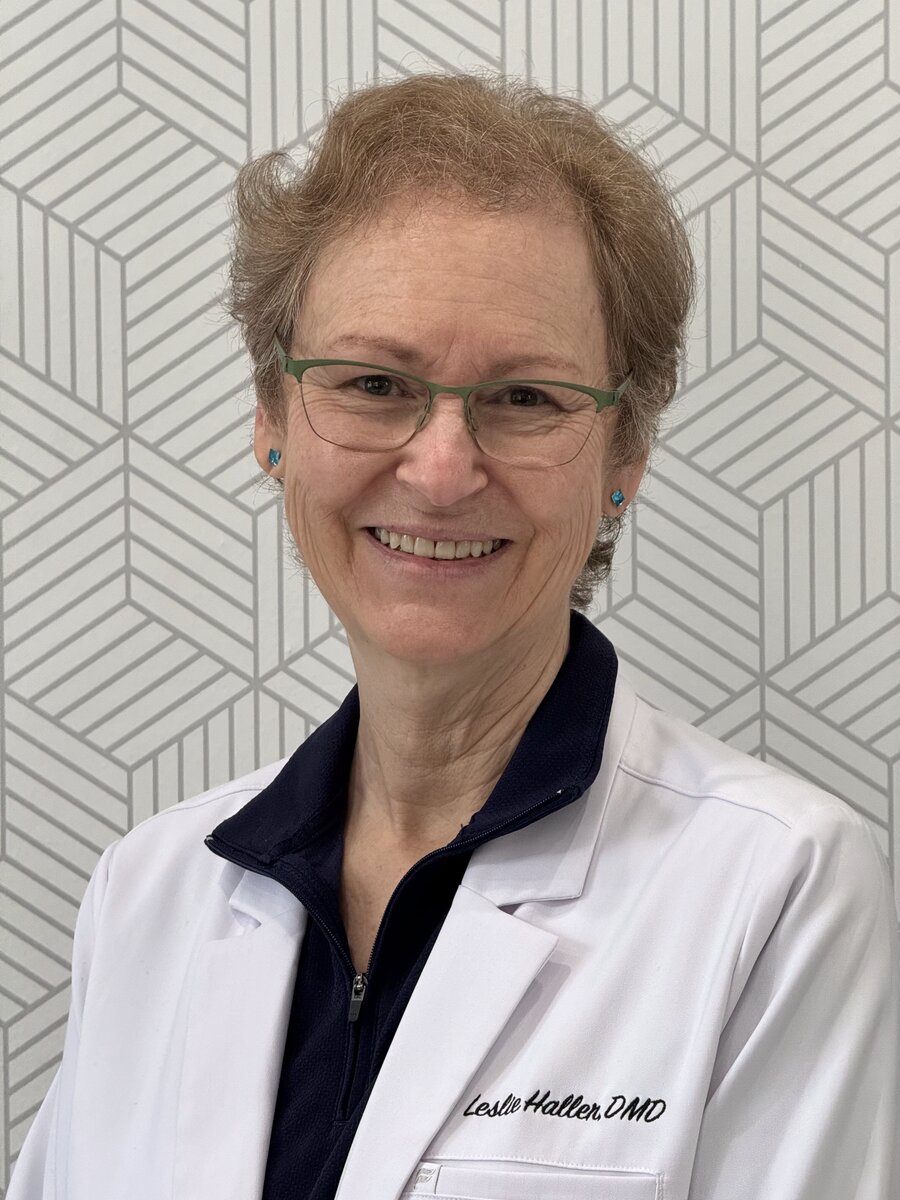
For years, the practice looked like most general dental offices. One of the things Dr. Haller did differently was CO2 laser tongue-tie releases in infants — a procedure that can transform breastfeeding in a matter of days. What she didn’t expect was what parents kept telling her at follow-up: the babies were sleeping better. Often dramatically better. That pattern stayed in the back of her mind.
Years later, a continuing-education course on sleep dentistry pulled the pieces together. She recognized the symptoms the instructor was describing — fatigue, restless sleep, the jaw clenching — in herself. She had grown up with an undetected tongue tie of her own, and she was living with sleep apnea as a result. She had been taught in dental school that an adult palate could not be expanded. The course, and the literature behind it, made clear that was no longer true.
Within two years she was off CPAP. Then she treated her husband. Then she stopped taking general-dentistry patients.
Everything that followed was a slow rebuilding of the practice around one question: is this person breathing? Tongue-tie releases stayed. Airway expansion came in. The CO2 laser found new uses — on snoring tissue, on tonsils, on frenectomies for adults who thought they were too old. Collaborative relationships with myofunctional therapists, ENTs, pediatricians, and sleep physicians became standard. Routine crowns and whitenings quietly left.
Today, the practice does one thing. It is smaller than it used to be, and by intention. The appointments are longer. The questions are different. And patients tend to arrive because someone told them — a spouse, a friend, a pediatrician — that what was happening to them at night might have a dental answer.